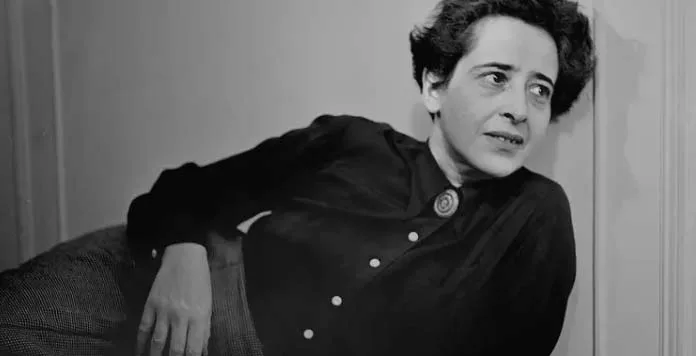
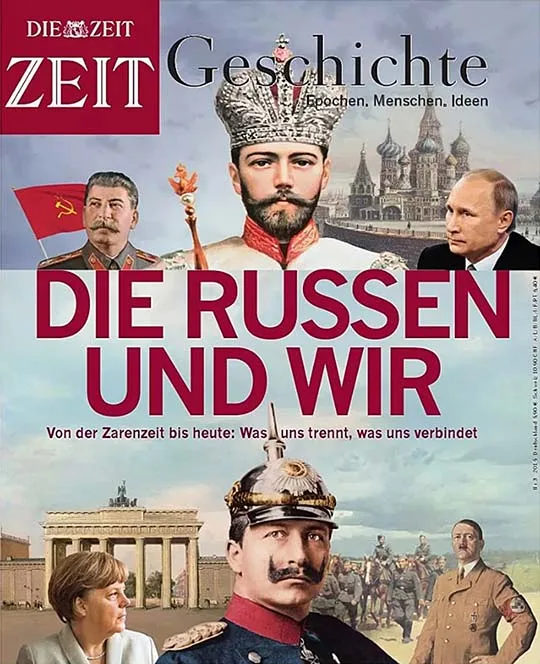
It is worth recalling that "Die Zeit" is associated with the figure of Marion von Dönhoff, an East Prussian countess whose contribution to the renewal of German-Soviet and later German-Russian relations can hardly be overestimated. I think her name is fairly well known in Kaliningrad. During perestroika Marion von Dönhoff came to Kaliningrad, to her former homeland, and supported the preservation of many pre-war cultural monuments. She made a significant contribution (including a financial one) to the re-creation of the Kant monument, whose original was lost during the war. Above all, however, as a prominent political figure in the Federal Republic, she stated that the Kaliningrad Region had become part of the Soviet Union, and later of Russia, and that Germany had no right to make any claims on the region.
From 1972 until her death in 2002 Marion von Dönhoff was editor-in-chief of "Die Zeit", and that is probably why the theme of East Prussia's heritage in today's Kaliningrad Region is so close to the hearts of the paper's journalists.
Inna Hartwich's report, published in the aforementioned issue of "Die Zeit Geschichte", is a journey to Kaliningrad in search of Königsberg. And the fact that the text will be about Königsberg, and much less often about Kaliningrad, is clear from the headline alone: "Back to Königsberg" ("Zurück nach Königsberg"). But the most interesting thing about the report is that the author and her readers are carried off to Königsberg not by the memories of Königsberg and East Prussian Germans who come to this land out of sentiment, but by the present-day inhabitants of this land – today's Kaliningraders.
From the easternmost corner of Germany, Kaliningrad became the westernmost corner of the Soviet Union
East Prussia, says Inna Hartwich, the author of the report "Back to Königsberg", has always been a bone of contention between Russia and Germany. As early as the First World War, these lands were the scene of bloody battles between German and Russian troops. Germany won then, but the Second World War marked the end of the German history of East Prussia.
The author of the report, Inna Hartwich, talked to Vera Shatan, who came as a little girl to a city that was no longer Königsberg but had not yet fully become Kaliningrad. She remembers the death of Kalinin, who never visited the city named after him, and the last Germans, who left the region in 1948. Vera recalls how curiously the German and Soviet children eyed one another, but the unwritten rule that they were not allowed to talk to each other was understood by both sides.
So she saw her Prussian peers but did not dare to speak to them. And then there were no Germans left at all, and, as Vera recalls, "you could walk into any German house and take everything for yourself".
Perhaps the "Die Zeit" reporter built this picture for herself from the stories of the people she talked to, or perhaps her imagination suggested it, but she sums up the story of little Vera Shatan, a girl from Stalinsk in southern Siberia who together with her parents suddenly found herself among the ruins of the East Prussian capital, like this: "(...) she had never seen anything like it before. Such luxury in bombed-out Königsberg". Vera has lived her adult life in Kaliningrad, but her granddaughter, like most of Kaliningrad's young people, affectionately calls the city "König". This name seems to her more fitting and cooler.
Inna Hartwich also finds other Kaliningraders in Kaliningrad: those who managed to photograph the ruins of the Royal Castle, who still played on Kant's grave and in the shadow of the walls of the Cathedral, dreaming of its restoration (for example, the architect Yury Zabuga). The author of the report also managed to talk to those who grew up in the new city, planned according to the Soviet idea of urban development, but who nonetheless see, value and try to preserve the heritage of old Königsberg. For example, Anna Karpenko of the "Save the Cobblestones" initiative group and Vlada Smirnova, whom "Die Zeit" calls the fairy of the Chernyakhovsk castle. And there is also Valery Jost, a Russian German who moved to the Kaliningrad Region from Kazakhstan, found an old house in Guryevsk and has been renovating it for himself and his family for several years now. For Valery, Kaliningrad is his Germany.
Moscow 1,200 kilometres away, Berlin half as far
In Inna Hartwich's view, life in Kaliningrad is life on an island. From the "island" to Moscow the distance is 1,200 kilometres, Berlin is half as far, and next door there is also Poland, where you can always pop over to go shopping. The island is by no means a new metaphor for the region; it tempts many journalists with its simplicity and clarity. Once, in a report I wrote together with Marek Górlikowski for the Polish publication "Duży Format" ("Large Format"), we resorted to it too.
The Kaliningrad island, as the "Die Zeit" report has it, is a little Russian, a little German, but very European. Here people say: "I don't go to Russia all that often."
If under Soviet rule Kaliningraders were not allowed even to mention the pre-war name of the city, in the 1990s history burst into their lives like a sea wave. Many inhabitants of the Kaliningrad Region value the East Prussian heritage and care about the past of the land they live on. In Inna Hartwich's view, the people living in the region are not simply post-Soviet or Russian people. They are also rescuing what is left of Königsberg, but they do it for their own sake, in order to preserve their identity.
After reading the report, one wants to say: "But it's not all that simple!" One gets the impression that the author is showing us a beautiful snapshot of people, with the complicated history of the place as the backdrop against which they are being photographed. It is hard to spot even a single scratch on this picture. Except perhaps when we read: "The castle and the medieval buildings of the Kneiphof, like the entire Löbenicht district, are unlikely ever to be fully restored. The context is missing."
That is exactly how one could sum up the Hamburg publication's report: "The context is missing".
After all, we won't read in it that those who are rescuing the cobblestones, the roadside avenues, the architectural monuments and the memory of the region's historical figures do not find it so easy. That there are also plenty of people to whom the East Prussian heritage is a matter of complete indifference.
That, for the sake of a street repair, the city authorities tried to hide the remains from an old cemetery. That Patriarch Kirill recently (in March) urged Kaliningraders not to put the German past on display and to concentrate on the new, Russian history of the region. That some political scientists warn that Germany thinks of nothing else but taking the Kaliningrad Region away from the Russians and getting its East Prussia back.
But even though the author of the report overlooked how contradictory and contentious the questions of preserving or restoring the German-Prussian heritage on the territory of today's Kaliningrad Region are, she perhaps deserves thanks for showing her German readers precisely such a beautiful "photograph" of a region that has managed to combine the Russian present with the German past. Even if it is not the full picture.