
Baltic.City — Kaliningrad & KönigsbergBaltic.City — Kaliningrad & Königsberg

Dates and Quotes

1973

VI

The feast... the bombers' feast has died away.
From portals March washes flakes of soot.
Here and there the tails of firecrackers stick out,
plumes stand, turned to stone forever.
And if you poke around here (to me,
a ruined house is like a hayloft full of needles),
then you may well find happiness
beneath the Quaternary shroud of shards.

VII

The maple puts out its first sticky leaf.
In the cathedral, a sawmill's whistle is heard.
And rooks are coughing in the deserted park.
The benches are soaking. And, all eyes,
a goat stares from behind the fence into the distance,
where greenery has burst forth at the farmstead.
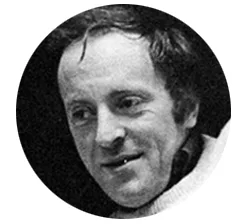
Joseph Brodsky “A Rotterdam Diary”, 1973
2021

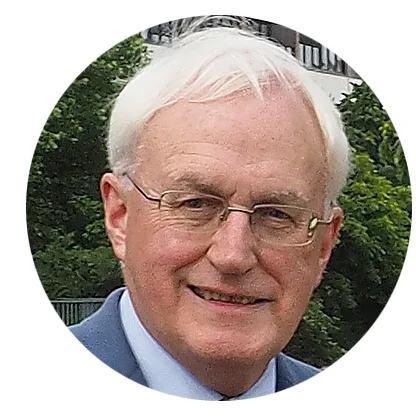
There is only one way out — to rebuild the castle. You won't be able to live without this castle; it will be rebuilt anyway, and if not under this government, then under the next one. It's needed there for your tourism. You must rebuild it according to the old plan and put a five-star hotel there; or, if you like, a series of restaurants or concert halls. But the outer forms must be the same — you will have all the photographs in the world, and you will be the richest region.

Alexandre Vassiliev Fashion historian
1327

Kneiphof received its town rights. In those distant times a fortress wall ran around the perimeter of the island, and the gates in it led to bridges to the mainland. Kneiphof was an independent town for almost 400 years – until 1724, when King Frederick William I united Kneiphof, Altstadt and Löbenicht into the single city of Königsberg.

2015
Alexander Khokhlov Head of the Sambian Archaeological Expedition of the Russian Academy of Sciences
1339

The main streets of Altstadt began to be paved with stone nearly 700 years ago. At first these were narrow “stone bridges”, which, gradually widening, turned into proper cobbled roads. In time the cobblestones gave way to paving setts. The richer the district, the smaller the stones and, accordingly, the smoother and better the road surface.

2016

First of all, our city has been extremely lucky. It is famous not for the name of some celebrated tyrant or warlord, and not at all for the name of the figure in whose dubious honour it is now named. Its principal inhabitant is not a darling of fortune raised to fame by chance, but a self-made man who, through painstaking work of thought and consistent effort of will, rose to the heights of the spirit from a starting position that promised little. Kant was not bothered by the provincialism of the city; he, the son of a saddler, simply went and put it on the map of world culture.

Vadim Chaly Philosopher, surfer
1697

The Grand Embassy headed by Peter I arrived in Königsberg. The entry into the city was as ceremonial as possible. The outcome of the stay on the banks of the Pregel of two hundred and fifty members of the Russian diplomatic mission, including the Tsar himself, was the famous Treaty of Königsberg. Among its other clauses was one guaranteeing the assistance of the Elector of Brandenburg to Russian "volunteers" sent abroad "for learning".

1968
Fritz Gause “Königsberg: The History of a European City”
1527

499 years ago Duke Albrecht founded the city's first library in Königsberg. Originally it was housed in the castle and was therefore called the Castle Library. Later it became the Royal Library, and subsequently it was transformed into a public city library.

1758

after three in the afternoon, the commander of the Russian army, General-in-Chief William Fermor, made a ceremonial entry into Königsberg (Kaliningrad) from the direction of Labiau (Polessk). Having ridden through crowds of onlookers along the city's main street, Königstraße (Frunze Street), Fermor and his retinue stopped at the Royal Castle, where he received from the city authorities the symbolic keys to the capital of East Prussia. The very next day the inhabitants began to be sworn in as subjects of the Russian Empress. The ceremony lasted two months. The first to take the oath were the senior officials, then the professors, including Immanuel Kant, then the ordinary officials, teachers and other office-holders.

1807

the French army entered Königsberg, meeting almost no resistance. Napoleon's soldiers quartered in the city on the whole behaved decently, so, despite some tension, the everyday course of city life was hardly disrupted. This lasted a little over a month: under the terms of the Peace of Tilsit they were redeployed from the city at the end of July.

1758

the procedure of swearing the population of Königsberg to allegiance to the Russian Empress Elizabeth began.

2024

2024 marks the 300th anniversary of Immanuel Kant (22.04.24) and the same number of years since the day when Altstadt, Kneiphof and Löbenicht were officially united into one city – Königsberg (13.06.24).


* Verba magistri — Words of the master (Latin)