Dear friends, welcome to the website that succeeds the VisitPrussia.com portal!
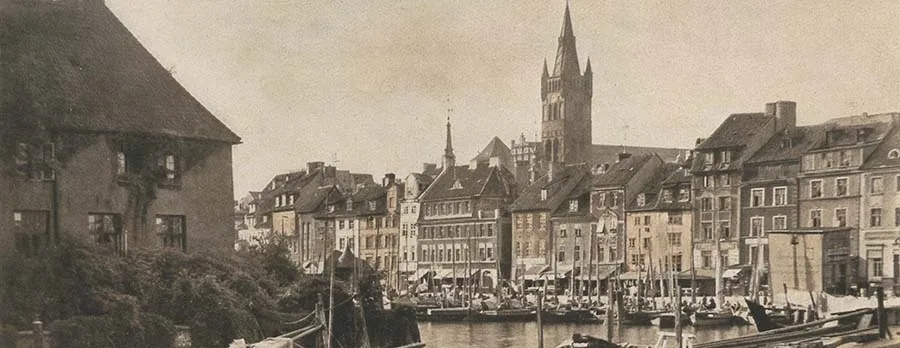
Since time immemorial the name Prussia has been used for the territory on the southern coast of the Baltic Sea between the mouths of the Vistula and the Neman — from Gdańsk (Poland) to Klaipėda (Lithuania). In the south Prussia ends at the city of Toruń (Poland), which also stands on the Vistula. The Kaliningrad Oblast (Russia) lies entirely within the Prussian lands. Kaliningrad, called Königsberg (Königsberg, German for “Royal Mountain”) for seven centuries, is the capital of the region. Altstadt (Altstadt, German for “Old Town”), which lay between the castle and the river, is the historic centre of Kaliningrad and its oldest part.
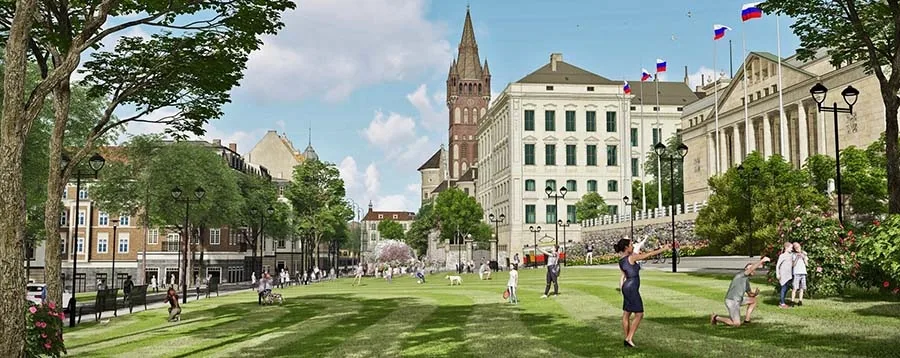
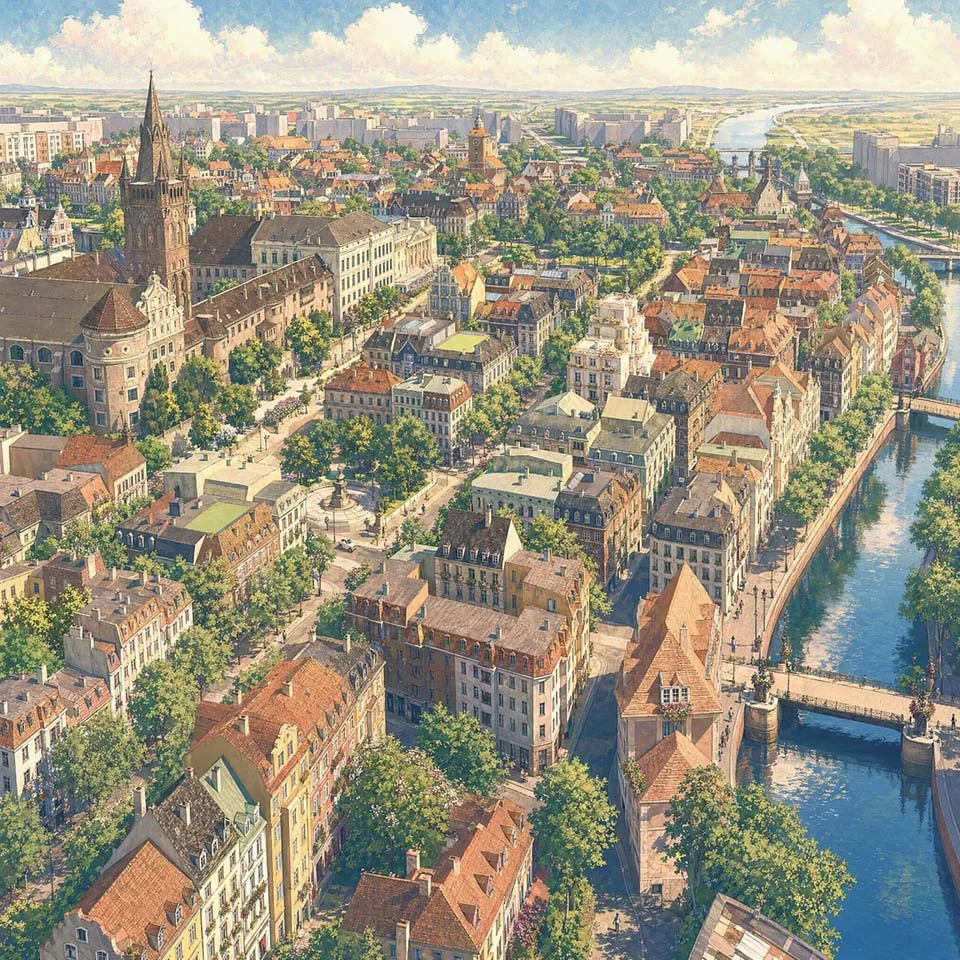 Altstadt. A rendering by Kaliningrad-based architect Arthur Sarnitz.
Before the conquest by the Teutonic Order in the 13th century, Prussia was inhabited by local tribes (Bartians, Curonians, Nadruvians, Natangians, Sambians, Scalovians, Sudovians). Together they were called Prussians (Lat. Borusci). In the course of the region’s Christianization the Prussians were assimilated by European colonists and became an organic part of the multi-ethnic society that took shape here. The last Prussians are believed to have died during the most terrible plague epidemic, which carried off about a third of the population of Prussia in 1709–1710.
The German period of Prussian history lasted 700 years (1246–1946). After the Second World War the northern part of Prussia (the polders in the Neman delta) and its eastern part were annexed to the USSR and became the Kaliningrad Oblast, while the southern part (the Masurian Lakes) and the western part went to Poland.
Our project is addressed to everyone who takes part in the present, is interested in the past and cares about the future of this region. On the site you will find these sections: Map — a compass for travellers; Nature — a mild climate, generous flora and fauna; History — the foundation of the present and the future; Folklore — the pre-Christian period, plus folklore; Cuisine — regional culinary traditions and recipes; Blog — the salt of this land, besides the sea. Besides the main menu, there are also: Excursions — routes around the region; Calendar — our chronicles under a “microscope”, each day on its own.
The mission of our project is to decode and decipher Prussia for a modern Russian-speaking audience, including so that the idea of restoring the historic center of the region’s capital gains more supporters.
Altstadt.com