This year our city hosted 9 film festivals. That is a record. They were attended by a record number of viewers. About 15,000 people came to "Koroche", about 8,000 to the EU Film Festival, one and a half thousand to the Chinese film festival... And people in the auditoriums weren't chewing – they were watching films, feeling for the characters, crying, laughing, thinking. Cinema from every corner of the planet is just like a trip around the world. You get to know people, you get to know countries, you get to know yourself, you put your hand on the knee of the girl you came with.
The oldest film festival in our region is the EU Film Festival. It is already 11 years old. But that's not really so old. If the festival were an 11-year-old boy, he would probably be thinking about the first kiss of his life by now, although he would still have a couple of years left to pull his classmates' pigtails.
How it all began
Eleven years is a long time. The festival began in the very year our city turned 750. It was a bold decision to celebrate the city's 750th anniversary. After all, it has borne the name Kaliningrad only for the last 68 years. That was when a clear awareness emerged that we are a part of Russia in the middle of the European Union. That all our neighbours are European countries.
And we wanted to learn more about them. Not only that food is cheaper in Poland, that Germany has cars and that in Lithuania you can stroll around Nida, but also what kind of people actually live around us, what they think about, what makes them cry and what makes them laugh. That was when the EU Film Festival came into being.
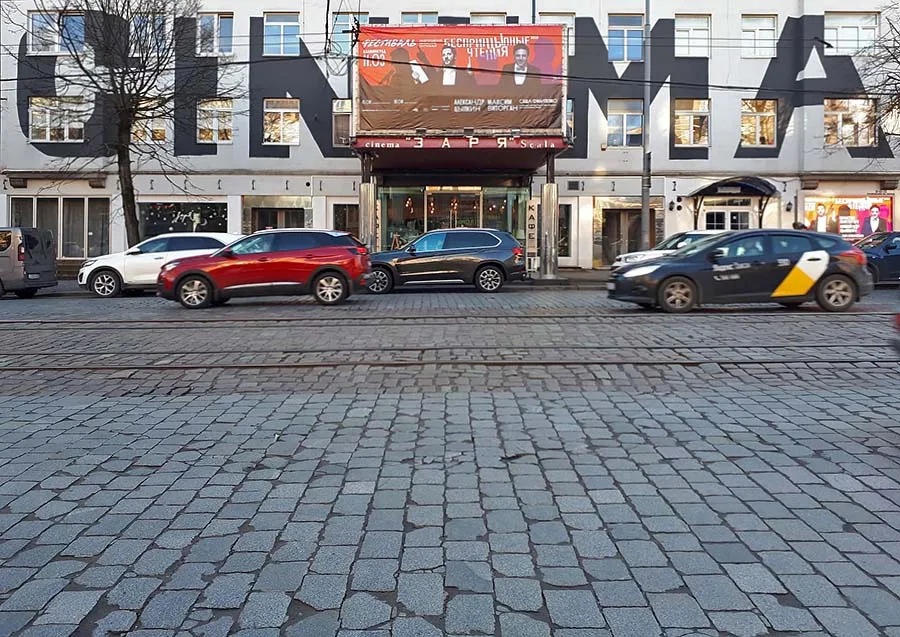
It all started slowly. Twelve participating countries, half-empty auditoriums at the ZARYA, films chosen in ways that were not entirely clear. That was 11 years ago. Over time everything changed. Gradually we began to understand how to run this festival, where to find viewers who know how to watch a film without chewing, how to put together a programme, where to get the films that everyone actually wants to see but just doesn't know it until they see the brand-new 50-page booklet. People really do wait for it. For some it is the only paper book they read from cover to cover in a whole year.
The festival's chief organiser is the EU Delegation to Russia. They came to us 11 years ago and said:
– We want to hold a festival at your place.
And we said:
– We want you to hold a festival at our place too.
That's usually how all good things begin. With the meeting of two I WANTs.
Then they explained to us how we would go about it.
– Here is a list of contacts at embassies, consulates and cultural centres. Write to them, and we'll write to them too.
And we started writing to them. It immediately became clear that the consulates in our city were active, lively, flexible, ready to perform small feats and help us look for films. Well, and most of those in Moscow were nothing like that. It was as if no people worked there at all, only answering machines and robots that reply "out of office" to any letter you send.
A film festival is, above all, people
In those first years we began to understand that we were actually dealing not with organisations at all but with people. There are people who are interested in helping us hold a festival in Kaliningrad, and there are those from whom we are simply trying to bite off a chunk of time that they would rather spend on something else. So the main thing is to find the right person.
And we found them in all sorts of places. At the French Embassy there was a certain Christelle. Within a year or two she was as anxious about our festival as if it were her own. Together with her we brought over Jean-Christophe Bouvet, who played the general in the film "Taxi". He came out on stage and put on his trademark smile… The audience gave him a standing ovation. At the time I kept worrying that the ZARYA had no proper spotlights to light the stage. But at that moment I realised that no spotlights were needed. You just have to invite stars onto the stage, and they will light themselves up with smiles like that.
Around the same time we met Joël Chapron, a selector for the Cannes Film Festival. All the Russian films that get into Cannes are his choice. At some point, despite how busy he was, he agreed to come to us, and later he brought along his colleague from Europa Cinemas. They looked over the cinema, studied the repertoire, climbed into the back seat of a Mini Cooper, crumpled themselves up in there and drove all the way to the Spit. And then they said:
– You're doing everything right. No shopping malls, no American junk food, no slot machines, bowling alleys, tacky interiors or cardboard Bruce Willises!
A separate entrance from the street, as in the best cinemas in London, lots of air and potted plants, birds singing in the café, light European cuisine, barely audible music – because the best music in the world is the sound of human voices at the next table.
That is how we were included in the Europa Cinemas network. There are only three cinemas in the country that have been granted this honour. One in Moscow, one in St Petersburg, and the third in Kaliningrad – the ZARYA cinema.
And then we brought over the Oscar-winning director Jean-Jacques Annaud. He is the one who made "The Name of the Rose", "Enemy at the Gates" and "Seven Years in Tibet".
I remember we went to the art gallery together. He said that he always visits the galleries in every city he comes to. And he looks not at touring exhibitions but at exhibitions of local artists.
– From them you can easily tell what kind of city you have come to. Understand what its essence is.
– And what is it? – I asked.
He pointed to one painting. It showed a worker with a weather-beaten, salt-encrusted face against the background of a huge ship and a crane. Ever since then, when I look at myself in the mirror, I see a crane. That's the essence.
And then Krzysztof Zanussi came to us. We spent two days with him, and I learned a great deal from him. In a restaurant he asked for local water, and he was told that all we had was Vittel. He shook his head:
– You should drink the water that flows beneath your feet.
That's what I do now. Whenever I get thirsty, I immediately punch a hole beneath my feet and drink from the well. Very tasty.
And once Michael Fassbender came. He had just appeared in François Ozon's film "Angel". A very bad film, and he acted very badly in it. But then we sat down on a terrace. It was Michael, Masha and me. We sat down and started chatting. And it immediately turned out that he had a wonderful sense of humour. Exactly the kind you rarely come across even in films since the days of Monty Python. He was instantly charming. I even forgot that he had acted so badly in "Angel". I remember thinking:
– Now, a person like this is surely someone you'd want to be on the same film set with. To have breakfast with him every morning, discuss the next scene, laugh. Directors will surely want to film him. Pity he's such a bad actor. He had barely left when we learned that Quentin Tarantino had invited him to be in "Inglourious Basterds", and then came all those Oscar nominations, and the jokes about his frontal nudity in the film "Shame", and his power in "X-Men", and now we are all waiting for 26 November, when we will be shown how he managed to play the role in "Macbeth".
Masha. She was my very first assistant. I can't work in a team at all. You have to run all together towards the finish line or towards some chosen goal, sit all in one office, get on each other's nerves, compete, prove that you're cooler, and when you've proved it, everyone around you takes offence, and if you haven't, then you take offence yourself. In short, I like individual sports, such as tennis, or being programme director of the EU festival. So, Masha was the first. At that time I was told, in connection with the EU festival, that I could get myself an assistant.
– It's simply essential, – they told me, – you can't do without her, she'll free up your time.
As if I were getting not an assistant but a computer – the slogan was roughly the same. She didn't free up my time. On the contrary, she took up even more of it. The Woody Allen monument alone ate up so much time. Masha made a film about Woody Allen and showed it all over the world. And the monument seems small. Just a pair of glasses at the height of Woody's head. And he is the size of a large child. He liked the monument; he chose the model himself. He even asked for two to be put up, if possible. In case one breaks. So that the second one would be there just in case.
And he liked the joke about Königsberg. I remember bringing back from Ireland, 20 years ago, a book called "The Complete Prose of Woody Allen". I opened the first page and read: Allan Stewart Königsberg. I couldn't believe my eyes.
It turns out his real surname is Königsberg! Little by little the monument began to take shape.
Masha left for Paris; after Masha came Lena, who took over curating the German strand.
– Since you speak German, Germany and Austria are on you, – I said.
Now she runs her own festival, "Territory of Cinema", where she shows Russian and German documentaries.
After Lena came Nastya, who was passionate about Iceland.
– You do know that Iceland isn't an EU country? – I asked.
She knew, but she thought it could be fixed. Besides, back then we also had a Nordic Countries festival, where she found an outlet for her passionate feelings for Iceland. But in general we thought at the time that nothing terrible would happen if we included Iceland in the European Union – an experimental inclusion within the framework of our festival. We looked for co-productions, for example, so that Iceland would make a film together with Denmark.
Then came the new Masha. She concentrated on children. And she still gets upset when the festival has not a single children's film. I don't say anything to her; I'm waiting for her to decide to fix it herself.
All in all, what matters are the people beside you and the people you find.
What more can I say, when one of the festival's most devoted friends turned out to be Lithuania's economic attaché. Economic! He left for Austria 8 years ago; he has a new diplomatic post there. He helped at the very beginning. It mattered to him. He came with his young wife. They were both so enthusiastic and active; it was his first posting. And then I remember we threw an after-party at a club. His wife came in a light polka-dot dress and smiled, at least for the first five minutes or so, and then she saw our girls and somehow wilted. Almost all of them were in thigh-high boots, and on their faces was an expression of such universal anguish, as if they had seen absolutely everything in this life and no longer knew why they should wake up in the morning, except perhaps to put on thigh-high boots. But I'm glad that in 8 years everything has changed. This year we also had an after-party, at Artishok; everyone was smiling, nobody was wearing thigh-high boots, many were smiling and falling over or dancing to music with a sense of humour rather than to boom-tss-boom.
The Eleventh Festival
And on the whole the Eleventh Festival was a success. I don't quite know why. We were upset all the time. First with Masha, then with Lena, then with Nastya, now with Masha again. Upset because every year we had to start practically from scratch. You come to the festival, you look around and see young 17-year-old faces. You immediately realise: aha, they've only just left school and will soon go to university – that perfect time of life when you should be going to festivals. And you think: next year they'll be 18, and they'll come again, and with them will come new 17-year-olds. That's how we'll grow!
But the following year the 17-year-olds came, and the 18-year-olds no longer did. Either they left for Moscow-Petersburg-Berlin-London, or a boring job took them wholly into slavery. I later met some of them in the city; they were no longer 18 but 47 each. Such joyless faces, uninteresting clothes, looking down at their feet... I looked down at their feet too; there was nothing interesting there.
The 11th festival was a success because people came. There were lots of them, many screenings sold out completely, people went to loads of films at once, they came to the festival, not just to one particular French film.
And the programme was interesting too. People bought passes for 5 films, but couldn't for the life of them choose 5 films out of 30. And they got stuck at the box office, read their booklets to shreds, sometimes complained. Sometimes about the projection, sometimes about the translation, or about subtitles with mistakes. And then other people turned up who were on fire and wanted to help: translate, dub, correct the mistakes. There were those who swore. They are allowed to; it's in films that it's now forbidden.
And so two and a half weeks have passed. The festival is over. Or rather, not quite over yet. We are sitting at the last film of the programme. It is called "Youth". A full house. Silence. Everyone watches two famous old men spending their lives in a Swiss sanatorium, the credits begin to roll, everyone applauds. Faces are glowing. I wasn't the only one who felt that the festival gets younger every year. I'm afraid that soon we won't be able to set a 16+ age limit any more – either the auditoriums will be empty, or they'll be full of those who sneaked in.
Well, here's one last thought. Don't leave the city. After all, if everyone who wanted to leave stays, it will be more fun here than in Moscow-Petersburg-Berlin-London. You weren't born here for nothing – there must be some meaning in it.
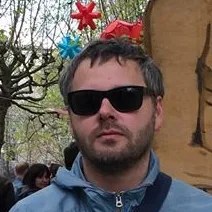
Photo by Mikhail Ogorodnikov.