

Let me say straight away that it is generally wrong to divide the Baltic region into a "European" and a "Russian" part. There are probably other points of view on this, but Russia is Europe after all, and it still has to return to the common family of nations once it gets tired of sulking on the sidelines. As for what people say now, for instance "Kaliningrad is next to Europe" — firstly, it is insulting to the ancient city of Königsberg itself (is it not Europe, then?), and secondly, it is a by-product of imposed political rhetoric. A couple of decades ago, in Spain under the dictatorship of Francisco Franco, people used to boast that "Europe ends at the Pyrenees", that is, at the border with France. And where is that now?
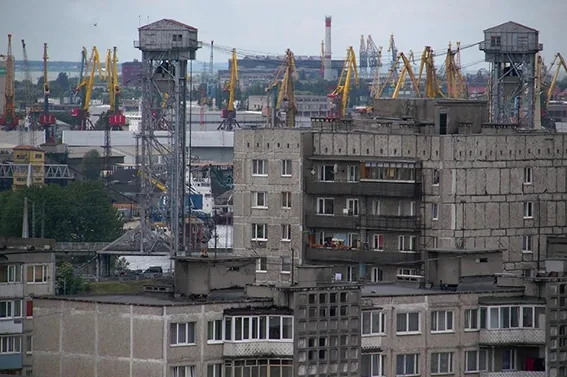
It is more accurate to speak not of a "Russian" but rather of a shared "Soviet" component. Over the last half-century and more, more or less the same thing happened all along the eastern shore of the Baltic, from the Gulf of Gdańsk to the Gulf of Finland. First they built Khrushchyovkas, then prefabricated panel blocks. They put up giant plants and handsome factories. They opened research institutes, schools, hospitals and libraries. Lutheran and other churches were turned into museums and observatories. Even now, as you walk through the underground district of Užupis ("Beyond the River") in Vilnius, every now and then you see a manhole cover inscribed "LitSSR"; the Stalinist tower of the Academy of Sciences still looms over Riga; and in Tallinn, if you walk from the bus station, before you reach the two-storey pre-war wooden houses you can find yourself on what looks like an ordinary Moscow outskirt.
These high-rises are not in themselves a sign of something special that the Russians brought with them. The suburbs of Paris and Berlin look much the same. It is simply that construction was standardised, and so the Baltic states suffer from a schizophrenia of perception: everything seems familiar, and people speaking Russian have just walked past, yet you are in NATO and the European Union, and the Soviet cultural matrix is not cultivated here — it is more of a housing-and-utilities inevitability. All efforts go into historical identity. So an ordinary five-storey block gets a pitched roof of red tiles and stops being "ours". Still, I admit that for a tourist this is even a good thing: abroad you want to see abroad, not a district town in the Moscow Region.
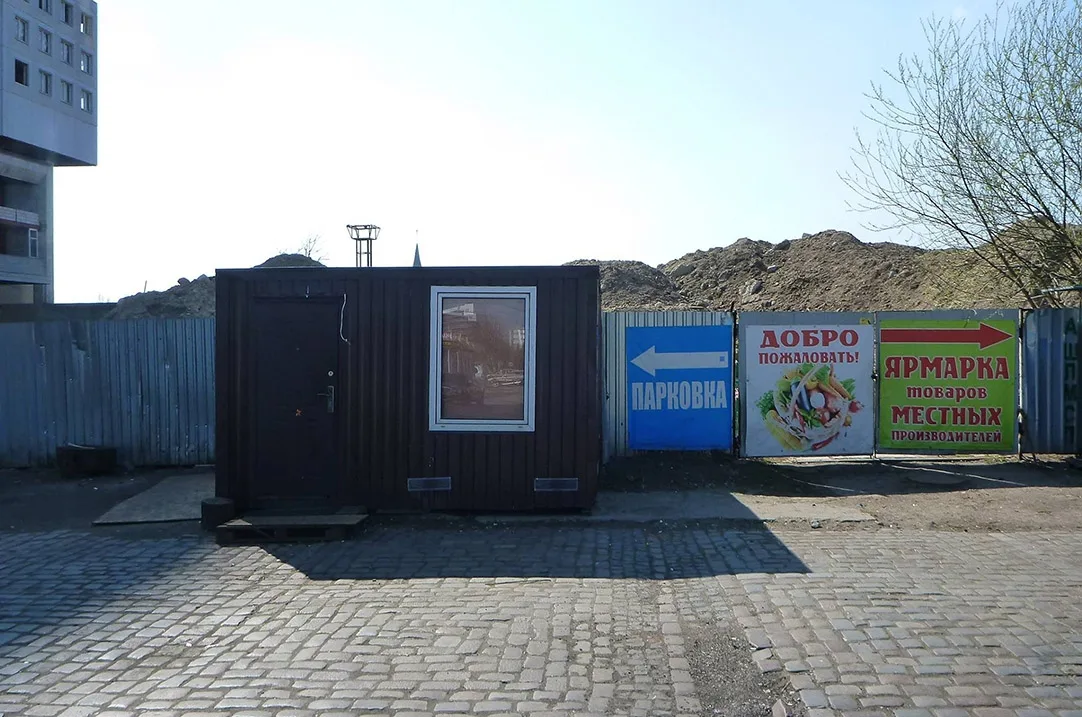
In the Kaliningrad Region the formula is the same: a recent Soviet layer on top of an ancient one — but here one should speak not so much of schizophrenia as of depression.
I don't know how it feels if you grew up amid all this, but when you come from outside, it all looks dispiriting. As if someone had decided to carry out a very cruel social experiment. Take 15,000 square kilometres somewhere in Europe, drive out all the inhabitants, settle Russians there and see what comes of it. I fear that if after the Second World War it had not been East Prussia that was handed over but, let us imagine, eastern Alsace or eastern Catalonia, the result would most likely have been the same.
This does not mean that the Kaliningrad Region lies in ruin or desolation — no, compared with many other regions of Russia it is a fairly prosperous region with an active population. Even compared with Kaunas, for example, which European money has evidently not yet reached, so that there you have to look at the constructivist houses of the 1930s in the original and unretouched.
It is just impossible to shake off the feeling all the time that this is some kind of picnic on the grave of an alien civilisation. When you gaze at the villas of Maraunenhof on Thälmann Street, when you enter churches converted for the Russian Orthodox Church, when you simply drive around the region and come across a half-ruined red-brick building.
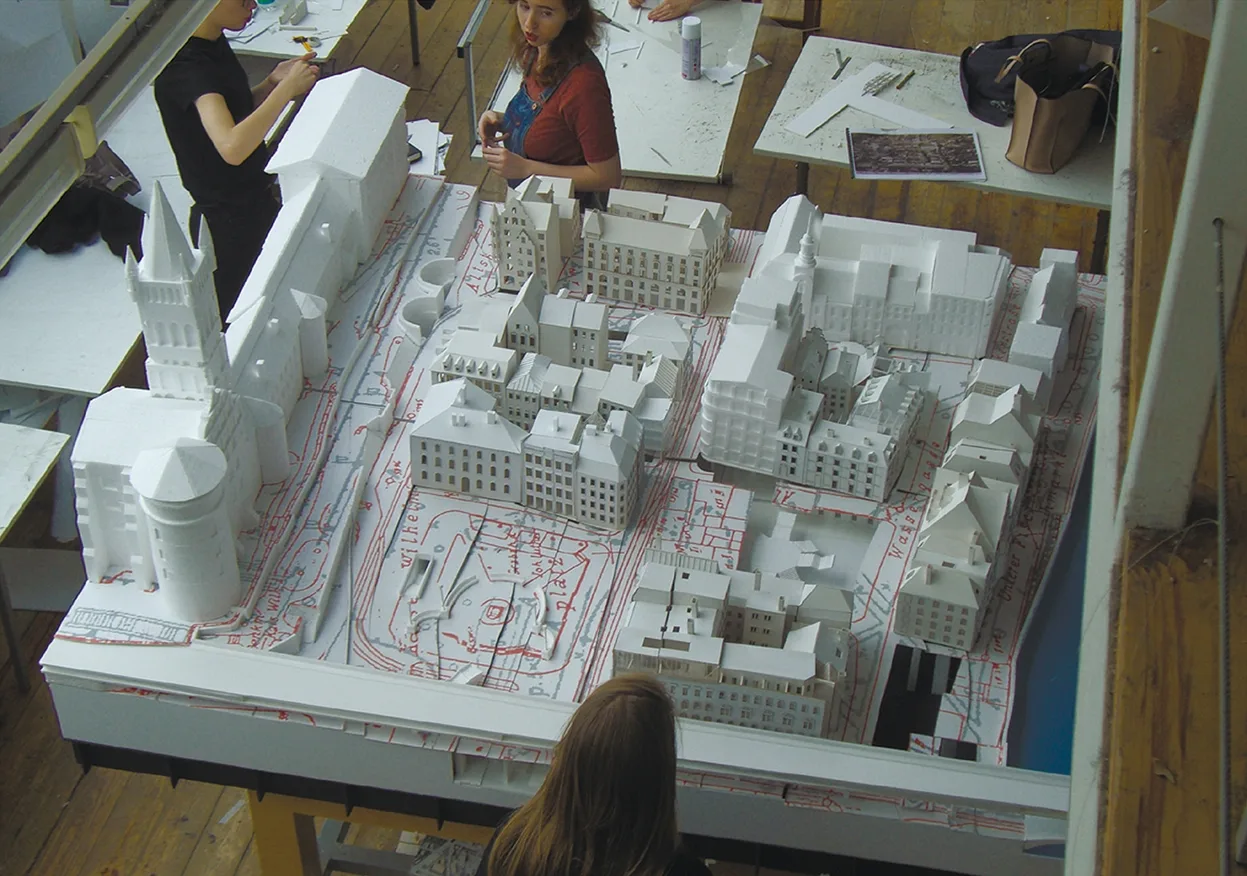
Of course, all this can be restored and perhaps even built anew, but what you end up with is some fake "Fishing Village". I remember trying for a very long time to photograph it so that the huge new buildings in the background stayed out of the frame. In other words, I was trying to play along with the pretence that this was some kind of old town and not half a dozen stylised new builds.
One might object: what is German is not our heritage, after all. True, but on the other hand, in the Baltics only the Lithuanians have a heritage of their own (and even that has to be shared heavily with the Poles). In Latvia and Estonia everything historical, by and large, does not come from their ancestors either, but from the Germans and the Swedes. At the history museum in Tallinn they tell you that these looked down on the Estonians as brainless peasants good for little. If you leave the museum and walk two hundred metres, you end up in the Hansa restaurant, a favourite tourist amusement, where the waiters are dressed in medieval German fashion and serve food fit for German merchants. And that's fine — cultural heritage.
In Kaliningrad there is nothing of the kind, and probably never will be, or not for a very long time, because at the very least the first generation of settlers is still alive; and if the local hipsters start selling "old Königsberg" too eagerly to tourists and to themselves, they will probably feel like looters — a feeling they have pushed out of their minds all their lives, because "the Germans attacked us" and "it is a fair reward after the war", and so on.
The path of half-measures, the "Fishing Village" path, is a dead end. They will not dare to go all the way "German", and the Baltic region has no need of one more Riga, only an insecure one. One has to look for an identity of one's own. For example, before the Germans the Prussians, Balto-Slavs, lived there. They could be studied. Or one could recall the Russian merchants in that same Hansa. Or look around. Even Lithuanian borscht and Polish pierogi in a café would draw more tourists than some artificial Middle Ages.
Anything, really, just to get rid of the feeling that we first built a Khrushchyovka and then a McDonald's in a cemetery.
Photo by Mikhail Ogorodnikov.