
Carolinenhof probably came into being at the very end of the 18th century as a Vorwerk (outlying farmstead) of the Kalthof domain (Kalthof / the settlement of Rizhskoye within the city of Kaliningrad). The Vorwerk is absent from the 1785 register of Prussian settlements, but it appears on a map dated 1796. In 1816 Carolinenhof was put up for public sale at a price of 10,560 thalers. As early as 1818 Carolinenhof is mentioned as an estate in the newly formed Landkreis of Königsberg. It belonged to the parish of the Altrossgarten Church. From the time of its first mention the estate had two dwelling houses, and their number did not change throughout the whole time Carolinenhof existed as an estate.
Evidently the estate took its name from a certain Caroline. German sources offer the version that during the demarcation for the future sale of the Kalthof domain lands the royal couple were in Königsberg, and Queen Louise was accompanied by her closest friend and mentor Karoline Friederike von Berg (Karoline Friederike Gräfin von Berg geborene von Haeseler, 1760–1826), and that the newly formed estate received its name in her honor. Under Queen Louise, Caroline von Berg held the post of lady-in-waiting (Hofdame) and senior mistress of the robes (Oberhofmeisterin), and was therefore obliged to be at court.

Carolinenhof on a map of 1796 and the cover of Urte von Berg’s book “Karoline Friederike von Berg – Friend of Queen Louise of Prussia. A Portrait in Letters.” Wallstein Verlag, Göttingen, 2008.
She was with Louise in Königsberg from December 1806 to January 1807, during Napoleon's occupation of Prussia, but the king later insisted on her returning to Berlin.
Contrary to claims that are sometimes encountered, Caroline von Berg herself never owned the Carolinenhof estate; this was not even possible, since in those years Carolinenhof was leased out as state-owned land. On the other hand, the von Berg family itself took an active part in organizing the estates and Vorwerke of the Kalthof domain for lease. In light of these circumstances, the link between Carolinenhof and the name of Louise's friend becomes highly probable. All the more so because in the early 19th century it was a very widespread practice to give estates and manors the names of members of the royal family and their entourage.
In any case, since we have touched on the name of Frau von Berg, it should be said that she was a thoroughly extraordinary personality of her era. King Frederick William III himself was categorically opposed to her association with the queen, believing that she was drawing Louise into highly "unreliable and eccentric circles", but here even his power was not enough. Members of these dubious societies included, among others, Johann Wolfgang von Goethe and Friedrich von Schiller, while the poet, enlightener and philosopher Johann Gottfried von Herder even called Caroline von Berg a "treasury of reason and practical wisdom".

One of the few surviving photographs of the grandstands of the Carolinenhof racecourse.
In the hardest years for the royal couple, Caroline always supported Louise in her aspiration to rally the Prussian patriotic nobility around herself.
She stayed with her until the last minute, when the queen was dying in June 1810 in Hohenzieritz Palace (Schloss Hohenzieritz), and she subsequently became her first biographer.
The Gutsbezirk (estate district) of Carolinenhof, consisting solely of the estate itself, was formed in the middle of the 19th century. On 30 April 1874 the Gutsbezirk of Carolinenhof was incorporated into the newly established Amtsbezirk of Kalthof. In the 1870s Carolinenhof received the status of a knight's estate (Rittergut), which gave its owner the right to estate representation in the Prussian House of Lords (the upper chamber of the Prussian parliament), as well as in the provincial and district chambers.
In 1879 the knight's estate of Carolinenhof owned 79 hectares of land (127th place out of the 143 Gutsbezirke of the Landkreis of Königsberg), and its property tax revenue came to 1,436 marks (120th place in the Landkreis).
In 1885 the Carolinenhof estate owned 62 hectares of land, of which 37 hectares were arable and the meadow amounted to only 0.1 hectare. Three families and five single persons lived in the estate's two houses, and by 1895 the population of Carolinenhof consisted of two families. On 21 April 1886 a small part of the estate's territory was transferred to the municipality of Königsberg.

A participant in a show-jumping competition at the Carolinenhof racecourse.
A new chapter in the history of the Carolinenhof estate began in 1889, when the "Königsberg Association for Horse Racing and Horse Shows" (Verein für Pferderennen und Pferdeausßtellungen) bought up the estate's land in order to build the city's main racecourse here.
Before that, horse races had been held on a site in the Devau area, and earlier still on a site outside the Friedland Gate. However, neither place satisfied lovers of equestrian competitions, whereas the lands of the Carolinenhof estate were ideal for the purpose. It should be noted here that the governing council of the "Königsberg Association for Horse Racing" included men with the surnames von Dönhoff and von Lehndorff (suffice it to say that these names would later be given to two Königsberg forts). They had colossal connections and influence in all Prussian administrations and echelons of power, and in addition were themselves owners of horse farms. So it was no great difficulty for the "Association" they headed to obtain all the necessary permits and approvals.
It was decided to equip the racecourse at Carolinenhof according to all the standards of those years, for to the local beau monde it was not only a sports venue and a betting totalizator but also a vanity fair. Therefore, besides racetracks and grandstands, the racecourse grounds were laid out with green areas, and a restaurant and tennis courts were built. Races at the racecourse were held in the summer season, from May to August. The racecourse's operation, the schedule of competitions and the totalizator odds were widely covered in the city press. Russian guidebooks to Königsberg also recommended visiting the racecourse. According to one of them, published in 1912, an admission ticket to the grandstands cost 3 marks 50 pfennigs. One could get to the racecourse from the Main Station by tram No. 1.

Carolinenhof (Carolinenhof) on a map of 1936.
On 1 April 1905 the entire territory of Carolinenhof, with the racecourse located on it, was incorporated into the city of Königsberg.
In the 1930s, in order to make fuller use of the territory and to attract not only citizens interested in equestrian sport, motorcycle races began to be held at the racecourse. To a certain extent this was a tribute to fashion: in that period East Prussia was experiencing a boom in motorcycle clubs, which were organized not only in cities but also in large villages. In motorcycle sport the main rivals were members of the motorcycle clubs of Königsberg and Rastenburg (Kętrzyn, Poland).
The first major official motorcycle competitions on the racing field took place on 24 July 1932. The event entered sports history under the name 1. Ostpreußisches Grasbahnrennen (the 1st East Prussian Grass Track Races).
Sports journalists of those years describe how the motorcycles reached speeds of over 100 km/h and went into controlled skids, showering spectators with clods of earth and tufts of grass, which threw them into complete delight. The people of Königsberg particularly liked the races of heavy motorcycles with sidecars, which were always included in the program of competitions thereafter. Large-scale grass track competitions were also held on 3 September 1933 and in the autumn of 1937. They drew tens of thousands of spectators from the whole Kreis and its surroundings.

The Carolinenhof racecourse (Pferde-Rennbahn) on a map of 1938.
On 9 January 1938 a ring-shaped ice track was flooded at the Königsberg racecourse, where the first ice speedway competitions were held.
These competitions mostly used German motorcycles of makes already well known then, BMW, DKW and NSU. The success of the motorcycle races led the city authorities to decide that the racecourse should be transformed into a large-scale public sports complex with a wide range of purposes and events. But the Second World War, which had begun, postponed these plans and, as it turned out, postponed them forever. The last races at the Königsberg racecourse took place on 22 July 1944.
The racecourse was seriously damaged during the first bombing of the city by the Royal Air Force (27 August 1944), which traditionally remains in the shadow of the second, which occurred three days later. On 27 August the British pilots failed to find the city center accurately and dropped their bombs northeast of it. The racecourse grounds were hit by these bombs: the stables and grandstands were destroyed and burned, and the racing field was damaged too. During the assault on the city on 9 April 1945, units of the 50th Army attacked the ruins of the racecourse. After all these fire strikes the racecourse ceased to exist as a facility altogether.
After the war, for almost 30 years the site of Carolinenhof was a wasteland. In some places it was waterlogged, and the dry areas were often seized by residents without permission for vegetable plots. The first building on the territory of the former racecourse was built only in 1984. It was the new building of Kaliningrad State University. And again a pause of a decade and a half. Development of the racecourse territory resumed in 2004, when over several years houses were erected on the new Prazhskaya (Prague), Berlinskaya (Berlin) and Rimskaya (Rome) Streets, which had not existed in Königsberg. Then in 2013 construction began on the "Kings' Residence" entertainment complex. The only pre-war building (built in 1944) on the territory of the Carolinenhof district is house 16–18 on Alexander Nevsky Street, which was restored on the basis of the earlier structure.

View from Vienna Lane of the Kantiana neocampus tower under construction in July 2026.
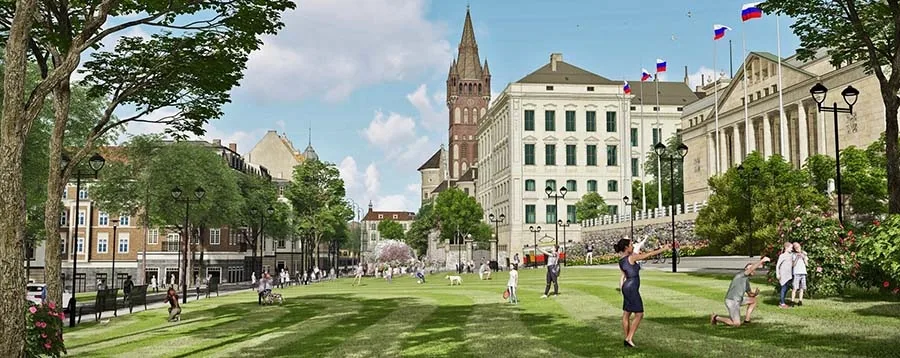
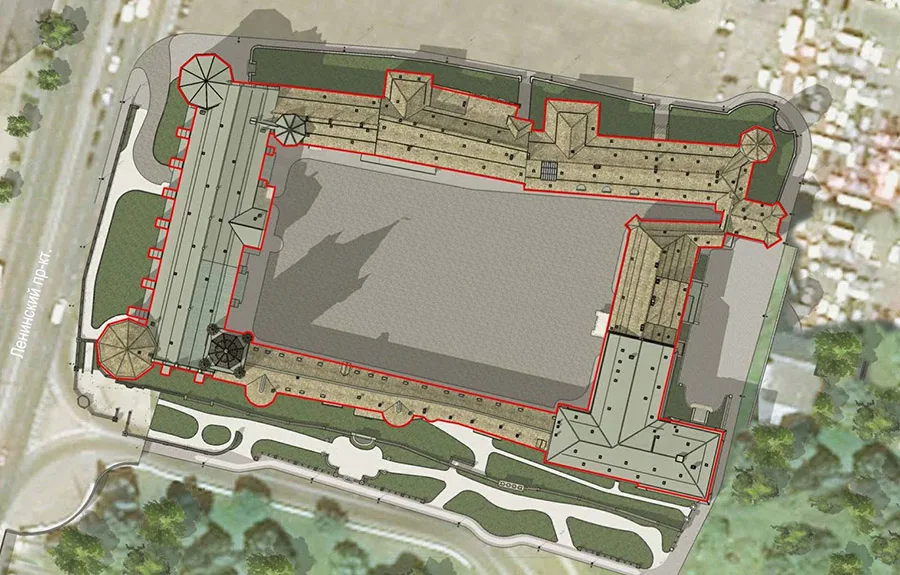
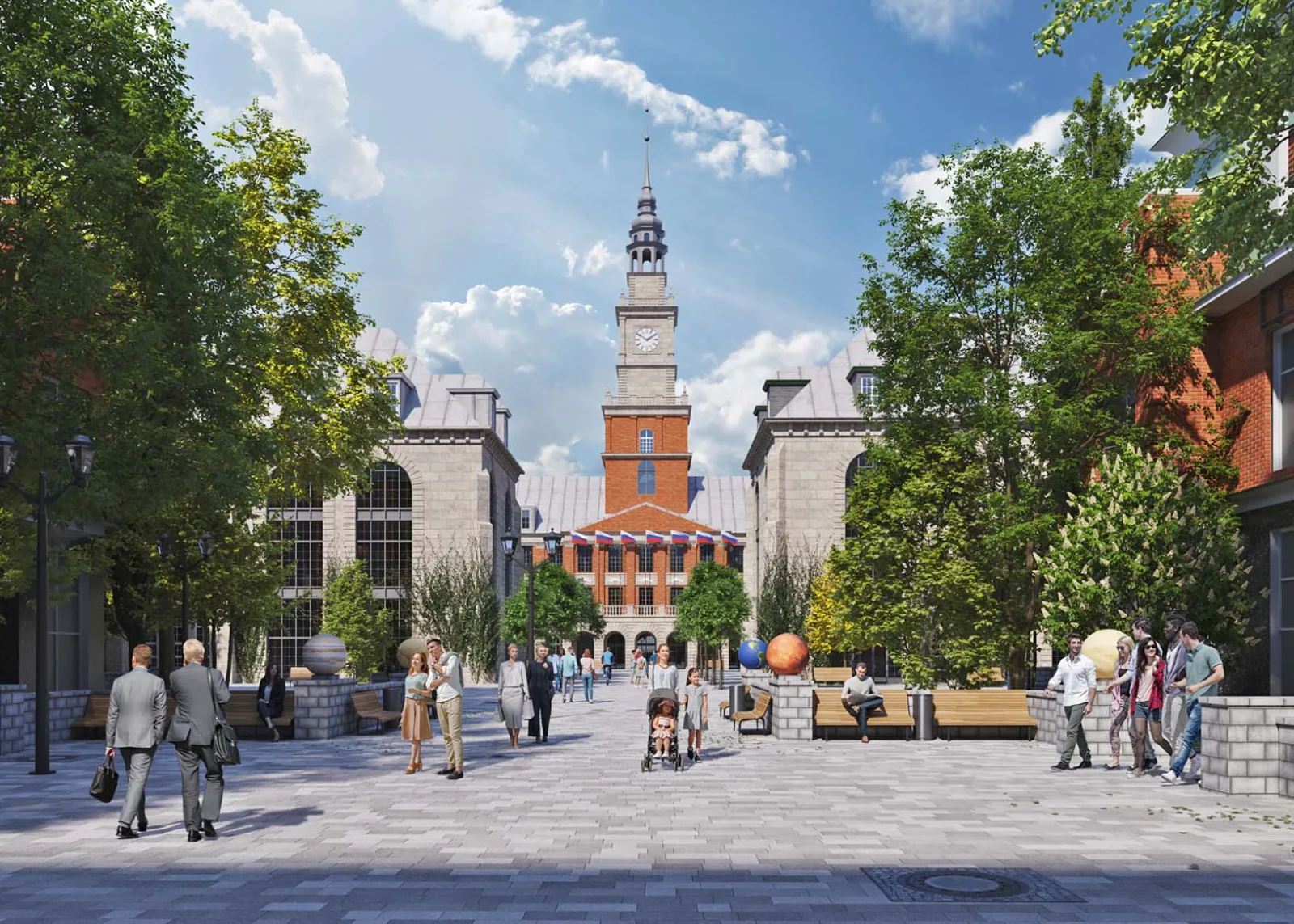
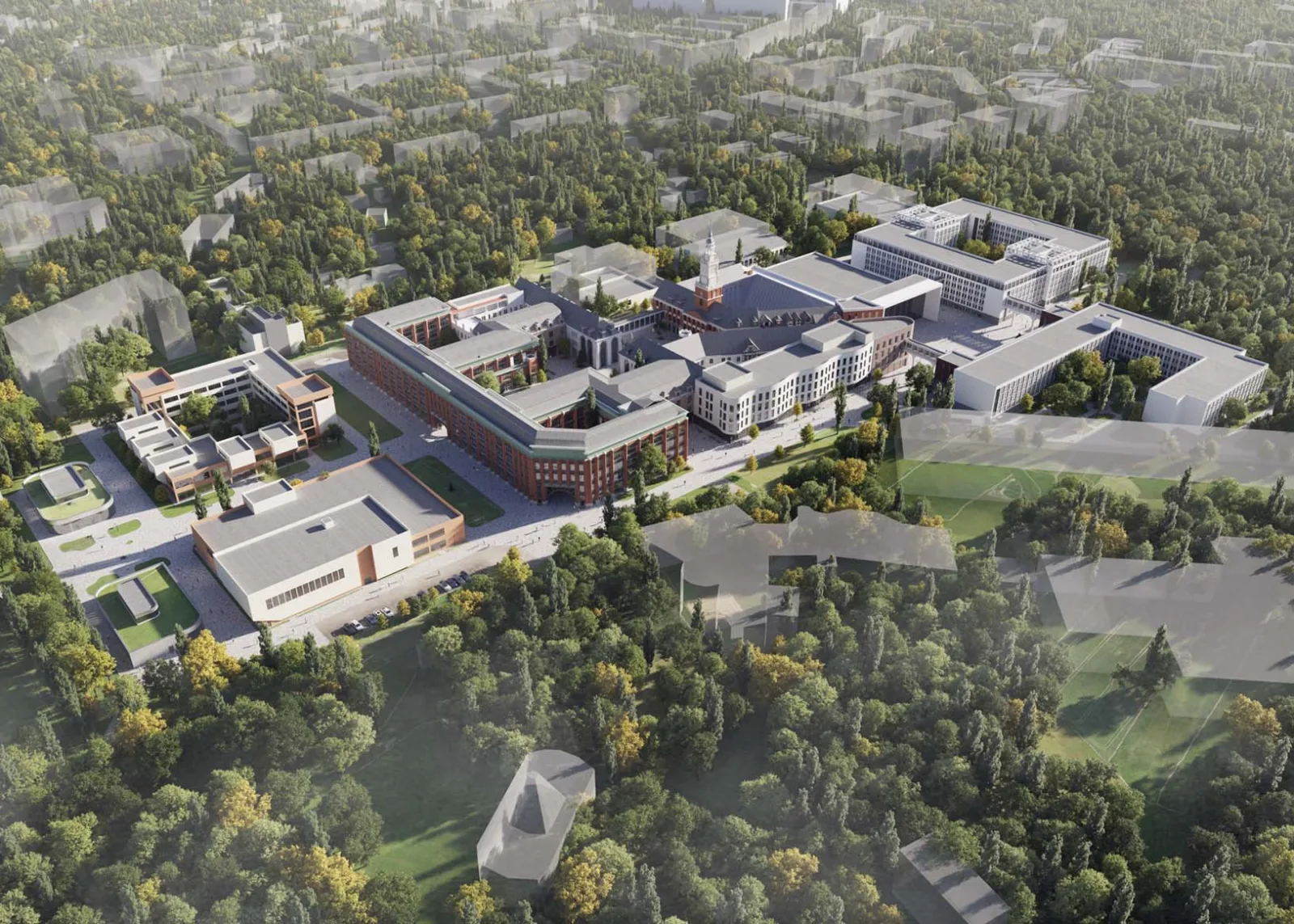
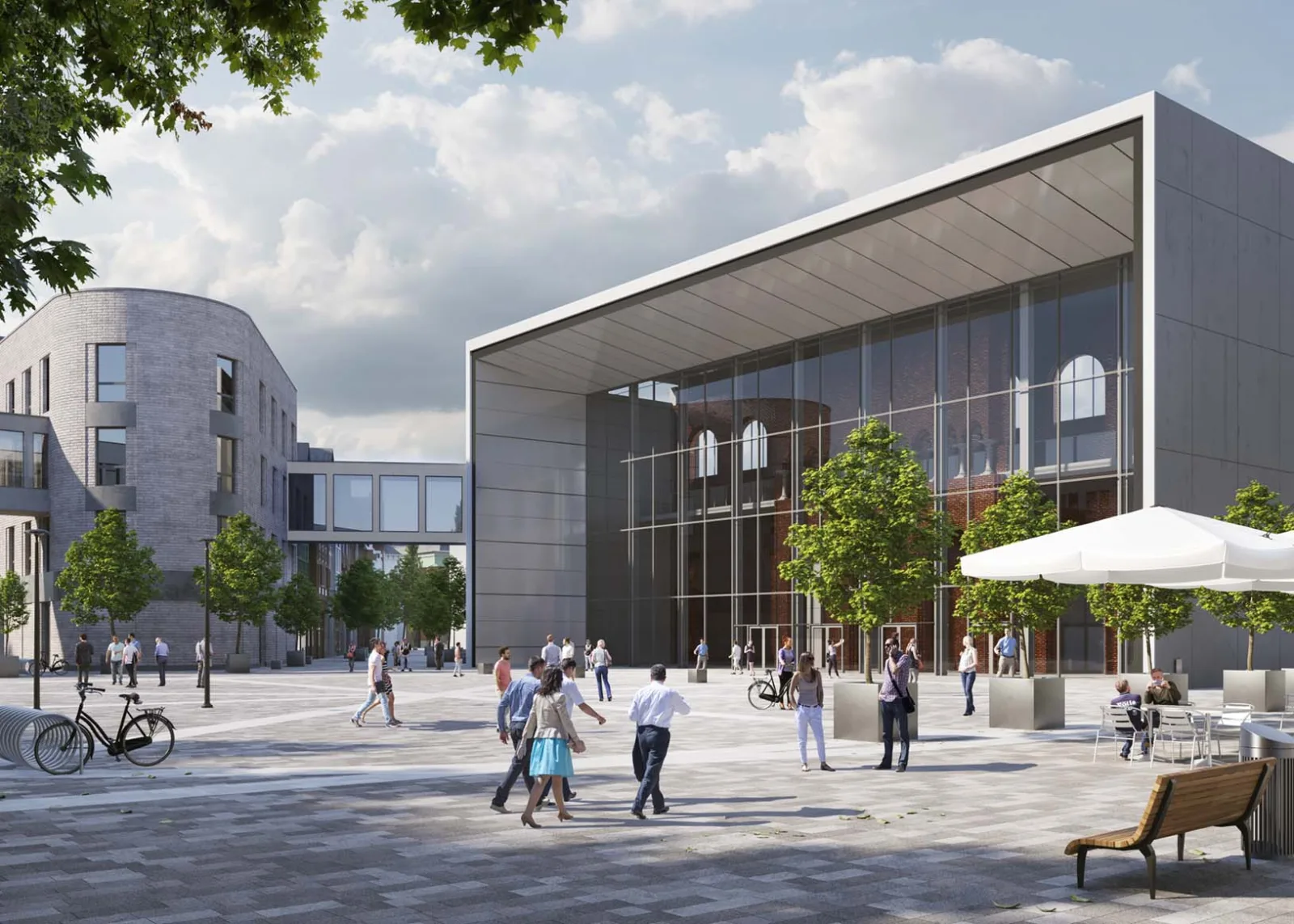
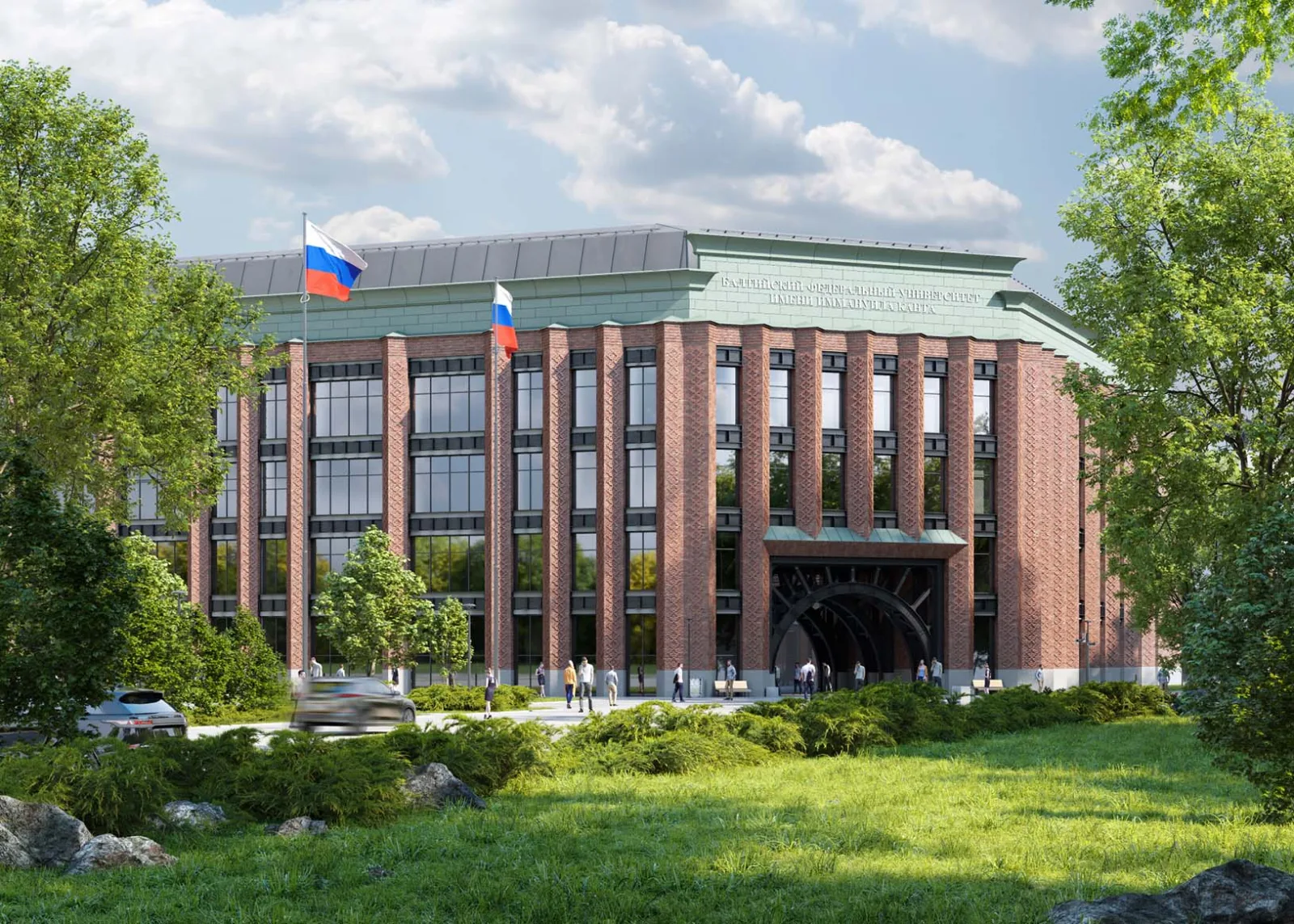
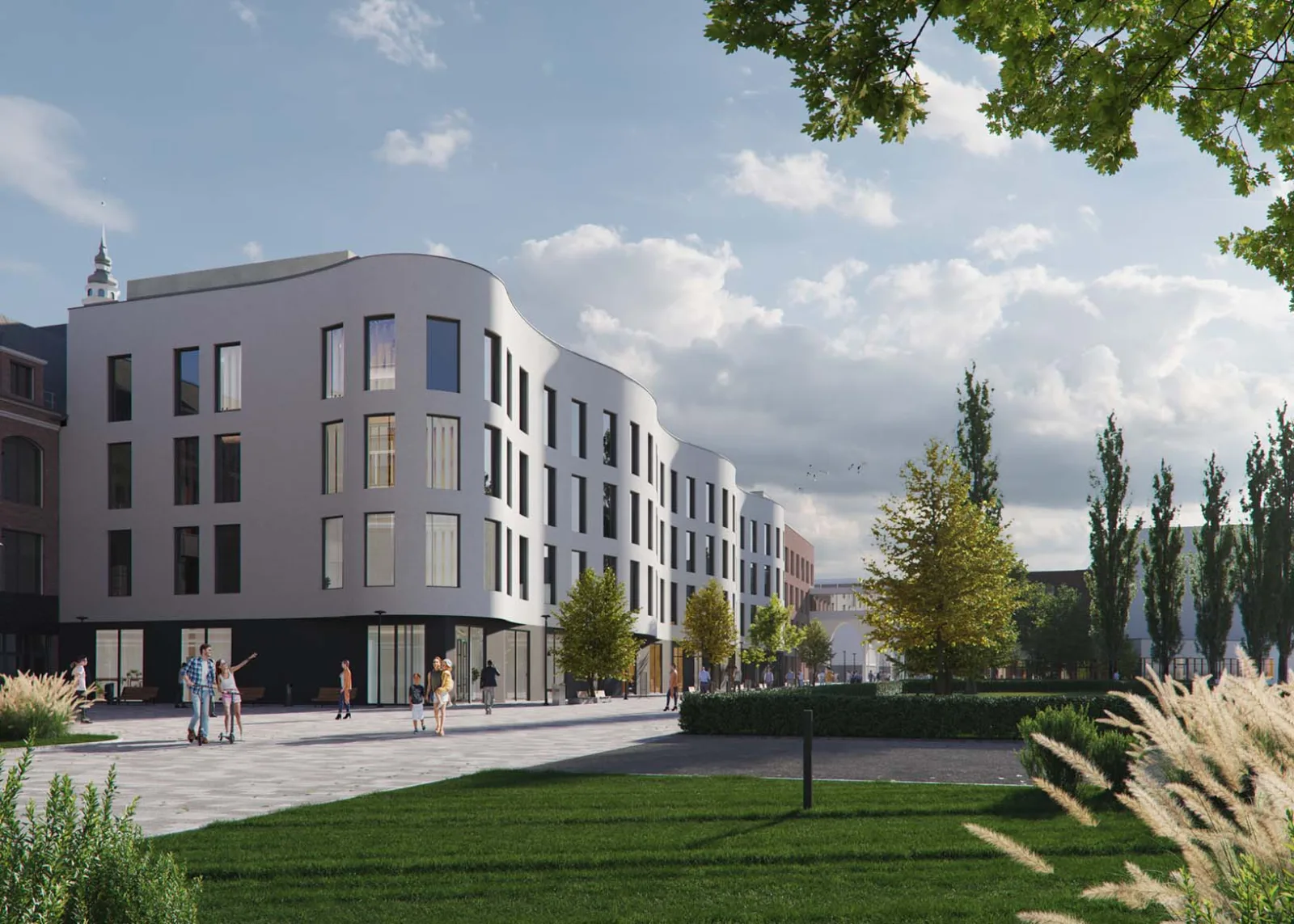
In our own days (since 2022) the Kantiana neocampus has been under construction on the remaining territory of the district (see above).
The ceremonial opening of the new campus of the Immanuel Kant Baltic Federal University, built to a design by the Kaliningrad architect Arthur Sarnitz, is scheduled for April 2027. The ceremony will be timed to coincide with the celebration of the university's 80th anniversary.
Population dynamics of Carolinenhof: 1818 – 47, 1828 – 42, 1840 – 38, 1858 – 32, 1867 – 26, 1871 – 17, 1885 – 24, 1895 – 14 inhabitants.
Composition of the population in 1871: all 17 were Evangelical Christians, children under 10 – 3, literate – 12 (86%).